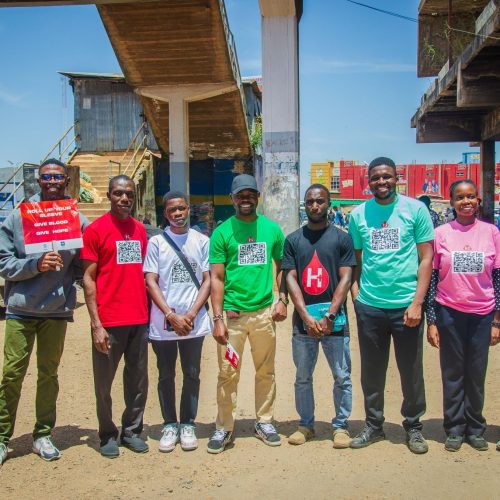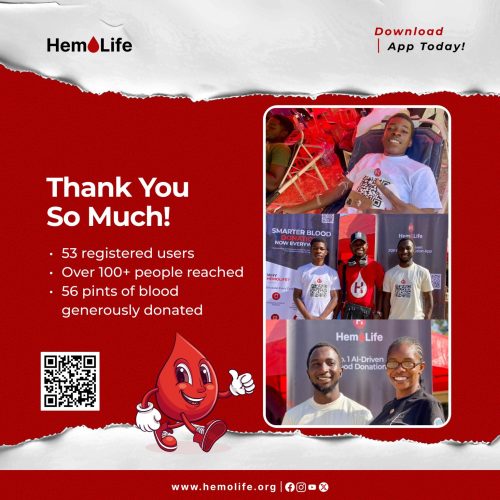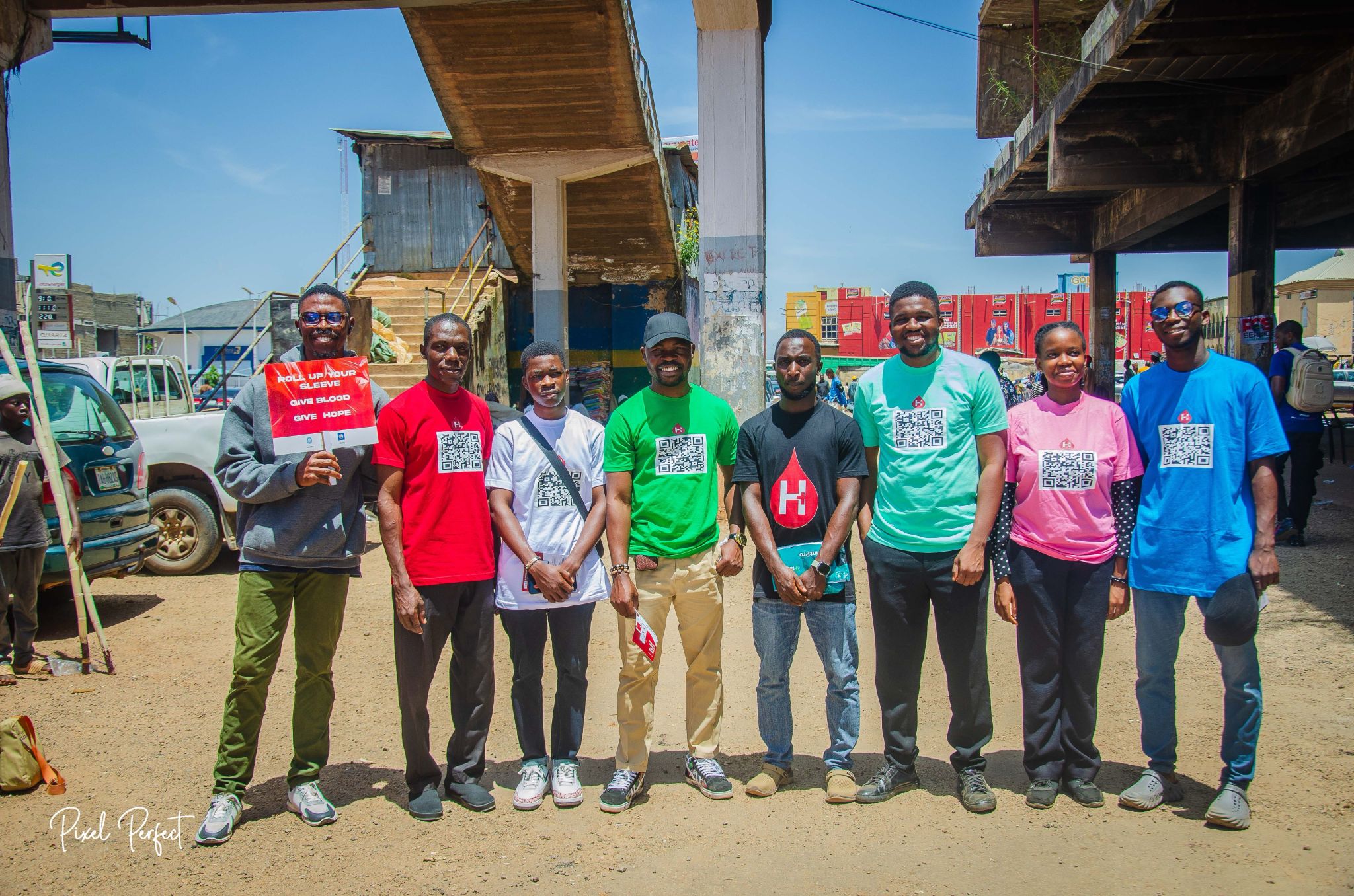
From a chance conversation to a life-saving blood drive-how community, partnership, and purpose came together in Jos. Blood saves lives. Yet, for millions living with Sickle Cell Disease, access to safe blood remains a daily struggle. In commemoration of World Sickle Cell Awareness Month, Hemolife partnered with the Jos University Medical Students’ Association (JUMSA) and the Department of Haematology & Blood Transfusion, Jos University Teaching Hospital (JUTH) to turn awareness into action, and the results were extraordinary. From Small Talks to Big Change Sometimes, the biggest movements begin with the smallest conversations. About two weeks before the blood drive, a simple discussion during a bus journey sparked an idea: What if we organized a blood drive to support patients in urgent need-especially those living with Sickle Cell Disease? Within 48 hours, that idea became a plan. Meetings were held. Roles were assigned. Partners aligned. Despite tight timelines and logistical challenges, commitment never wavered. As the CEO of Hemolife, Emmanuel Ejike often says:“Partnership makes everything possible.” Bringing Blood Donation to the Heart of the Community On Saturday, October 4, 2025, the Metro Bus Park at Terminus Market, Jos, transformed from a busy commercial hub into a center of compassion, healthcare, and hope. This strategic choice of location ensured that blood donation awareness reached everyday people; traders, commuters, students, and residents, right where they are. Impact at a Glance These numbers represent more than statistics. They represent futures preserved, families protected, and hope restored. Why Blood Donation Matters for Sickle Cell Disease Nigeria carries one of the highest global burdens of Sickle Cell Disease, and many patients depend on frequent blood transfusions to survive crises. Unfortunately, blood scarcity remains a major challenge. This blood drive focused on: Every donor became a hero. Every pint became a lifeline. Powered by Purposeful Collaboration This impact would not have been possible without the collective effort of committed partners and volunteers: This was collaboration in its truest form. Beyond One Blood Drive This event reaffirmed Hemolife’s mission: It showed us that: We are just getting started. As we continue to expand blood donation awareness and access across communities, one thing remains certain, together, we can make blood scarcity history.
168 Lives Saved: How Hemolife and AIESEC in Jos Turned a Blood Drive into a Movement
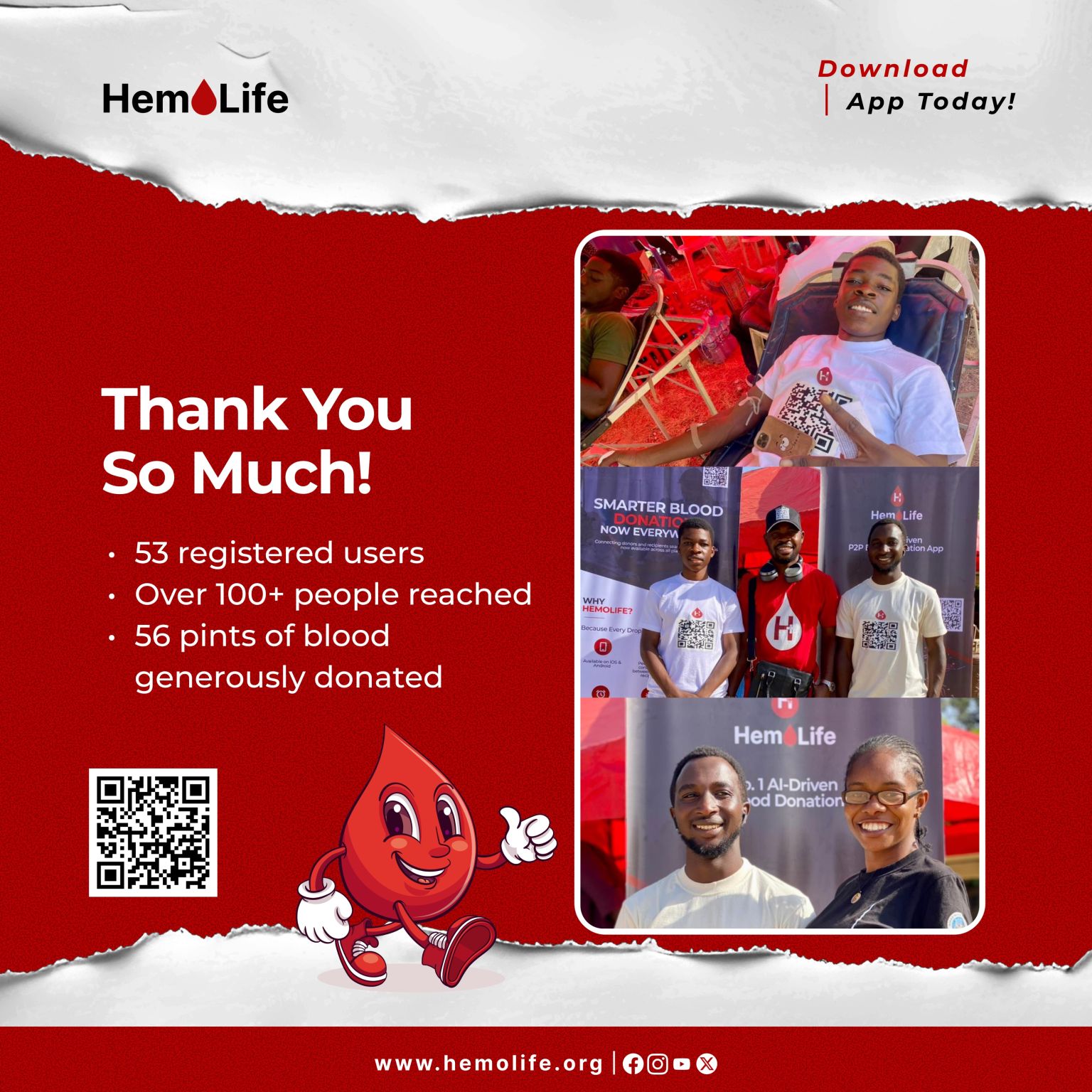
At Hemolife, we believe that saving lives should not be complicated,it should be accessible, community-driven, and powered by purpose. Recently, that belief came alive in a powerful way as we collaborated with AIESEC in Jos to host a blood drive that proved one thing clearly: when young people unite around impact, lives are changed. A Small Event with Massive Impact On Friday, December 5, 2025, at the Abuja Student Hostel, University of Jos, Hemolife and AIESEC in Jos came together under the AIESEC Health Day Initiative to educate, engage, and inspire students and residents around one critical cause, voluntary and regular blood donation. What followed exceeded expectations. By the Numbers: This wasn’t just a blood drive. It was a reminder of what’s possible when technology meets community action. Educating First, Saving Lives Next A major focus of the drive was education. Many people still have fears or misconceptions around blood donation, who can donate, how often, and what impact it truly has. Together with AIESEC volunteers, we broke down these myths, explained the importance of regular voluntary donation, and showed participants how one donation can save up to three lives. The response was inspiring. Questions turned into conversations. Conversations turned into action. Experiencing Blood Donation the Smarter Way Beyond donating blood, participants were introduced to the Hemolife App, our solution to making blood donation smarter, more engaging, and seamless. Using the app, participants saw how Hemolife: For many, it was their first time seeing blood donation integrated with technology in such a user-friendly way, and the excitement was clear. Powered by Partnership Our partnership with AIESEC in Jos was anything but small. Their passion for youth-led impact and health advocacy aligned perfectly with Hemolife’s mission. From mobilization to execution, the collaboration showed what happens when organizations with shared values come together to serve humanity. Gallery Looking Ahead This blood drive is not the end,it’s a beginning. As Hemolife continues to expand, our focus remains clear: To everyone who donated, volunteered, educated, or simply showed up, thank you. You are the reason 168 lives now have hope. Together, we are building a future where no one dies because blood was unavailable. Download now at www.hemolife.org and start saving lives today!

Why Nigeria Needs a Smarter Blood Donation System
Every day in Nigeria, lives hang in the balance because of a shortage of safe, accessible blood. From accident victims to women with childbirth complications, to children battling severe anaemia, blood transfusions are often the difference between life and death. Yet the reality is sobering: Nigeria does not have enough regular, voluntary donors to meet its needs. Much of the supply comes from “replacement donors”; family or friends who give blood only when a patient they know is in need, rather than from a stable base of regular volunteers. This system creates dangerous delays and uncertainty (World Health Organization, 2023). The Numbers Tell the Story The World Health Organization (WHO) recommends at least 10 blood donations per 1,000 people annually (World Health Organisation, 2025). In many African countries, including Nigeria, the rate is far lower, often less than 5 per 1,000 people (World Health organisation Africa Region, 2025). According to NBSC, Nigeria gets only 27% (500,000 pints) of its annual blood need from voluntary blood donors, leaving a shortfall of about 73.3% of blood need every year.(World Health organisation Africa Region, 2023) Also, the Nigerian Medical Association (NMA) has also stated in the past that less than 4% of eligible adults donate blood voluntarily and also noted that 10 percent of HIV infections in the country comes from commercial blood donations, which makes up 90 percent (1,030,000 per annum) of total blood donation in Nigeria.(The Nation Newspaper, 2021) Why Voluntary Donation Matters Research shows that regular, voluntary unpaid donors are the safest group, with the lowest prevalence of bloodborne infections like HIV, hepatitis B, and hepatitis C. While 78 countries collect over 90% of their supply from voluntary unpaid donors, many countries including Nigeria, still rely heavily on replacement or even paid donors.(World Health Organisation, 2010,) This reliance not only impacts safety but also makes it harder to have blood ready before emergencies occur. The High Cost of Shortages When hospitals can’t find blood quickly, delays can be deadly. Common scenarios include: A shortage in these moments doesn’t just cost time, it costs lives. The Technology Gap Beyond donation rates, Nigeria also struggles with: WHO recommends that all activities (from collection to distribution) be managed under a nationally coordinated system with strong policies, legislation, and modern infrastructure. Unfortunately, in many low- and middle-income countries, such systems are either incomplete or poorly implemented.(World Health Organisation, 2025) A Smarter Way Forward Nigeria needs a smarter, technology-driven blood donation system. Imagine: Such innovations could dramatically reduce delays, improve safety, and ultimately save thousands of lives each year. Why Technology Like the HemoLife App is the Game-Changer By integrating technology like the HemoLife app, these ideas become practical, scalable, and accessible. With HemoLife, a donor can instantly find the nearest certified donation center, schedule an appointment, and get reminders when they’re eligible to donate again. Hospitals and blood banks can issue urgent blood requests that reach only the right donors, cutting search time from days to minutes. A secure national database within the app can verify donor history, track test results, and prevent unsafe transfusions. Plus, built-in gamification and recognition features can keep donors motivated and engaged year-round. This isn’t just convenience, it’s the future of blood donation in Nigeria, built for speed, trust, and life-saving impact. The Call to Action Nigeria has the people. We have the will. Now, with the right tools, we can have the blood supply our healthcare system desperately needs. By embracing smarter systems like HemoLife, we can ensure that when someone needs blood, they won’t have to wait. The message is simple: Donate blood. Save lives. Join the future of blood donation.
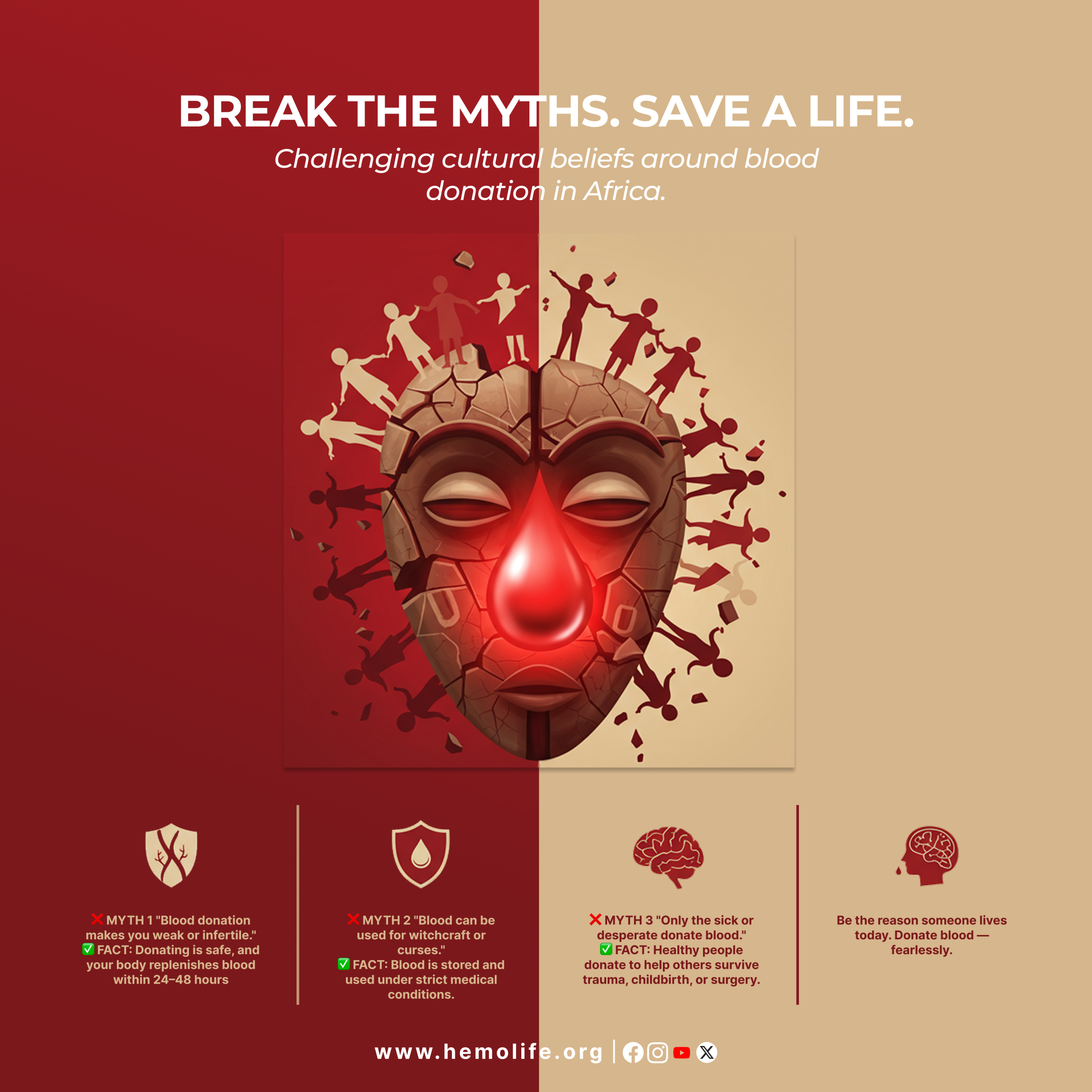
Breaking Cultural Barriers to Blood Donation
Blood donation is a vital component of healthcare systems worldwide, providing lifesaving transfusions to patients in need. However, in Nigeria and many parts of Africa, cultural barriers hinder the progress of blood donation programs.

The Power of One: How a Single Donation Saves Lives
Blood transfusions are indispensable in medical treatments, from surgical procedures to managing severe anemia and inherited blood disorders. Despite the critical need, Nigeria faces a stark deficit in voluntary blood donations. According to the World Health Organization (WHO), while transfusions save millions of lives annually, only a minuscule fraction of Nigerians are regular, voluntary blood donors. This shortfall often leads to dire consequences, especially during emergencies and for patients requiring regular transfusions. In Nigeria, the demand for blood transfusions is a pressing concern, with the nation requiring approximately 2 million units of blood annually to meet its healthcare needs Daily Trust. However, the current supply falls significantly short, with less than 30% of this demand being met Healthwise. This disparity underscores the critical importance of voluntary blood donations in bridging the gap and saving countless lives. Quick Facts: Blood Demand in Nigeria These statistics highlight the urgent need for more voluntary blood donors to bridge the supply gap and save lives. Other reads: What is Sickle Cell Disease? The Role of Blood in Post Partum Hemorrhage (PPH) The Impact of a Single Donation One blood donation, typically around 450 milliliters, can be separated into various components—red blood cells, plasma, and platelets—each serving different medical purposes. This means that a single donation has the potential to save multiple lives. Who Benefits from a Single Donation? A single donation can mean the difference between life and death for patients in need. By donating blood, one person can help save up to three lives while improving overall healthcare outcomes in Nigeria. Challenges to Adequate Blood Supply in Nigeria Despite the critical need for blood, Nigeria faces several challenges in maintaining a sufficient and safe blood supply. These barriers contribute to the persistent shortage, increasing the risk of preventable deaths. 1. Low Voluntary Blood Donation Rates 2. Cultural and Religious Beliefs 3. Lack of Public Awareness and Education 4. Poor Infrastructure and Blood Bank Accessibility 5. Testing and Blood Safety Concerns 6. Financial Constraints Addressing the Challenges Without urgent action, Nigeria’s blood shortage crisis will continue to cost lives. Addressing these challenges will help build a sustainable, safe, and reliable blood supply system. To bridge the gap between blood demand and supply in Nigeria, a comprehensive and sustainable approach is essential. This requires collaboration among government agencies, healthcare providers, NGOs, and private organizations. HemoLife, a leading health-focused organization, is at the forefront of this mission, working to ensure safe, accessible, and voluntary blood donation systems in Nigeria. Be Part of the Solution: Donate Blood Today! Every individual has the power to save lives through a single blood donation. Whether you are a first-time donor or a regular volunteer, your contribution can make a life-saving difference for accident victims, mothers in labor, sickle cell patients, and others in need. HemoLife is calling on Nigerians from all walks of life to join this movement. By donating blood, you become a hero to someone in desperate need. Take Action Today! Together, we can create a healthier Nigeria with a sustainable blood supply. Let’s donate, educate, and advocate for a better future. References
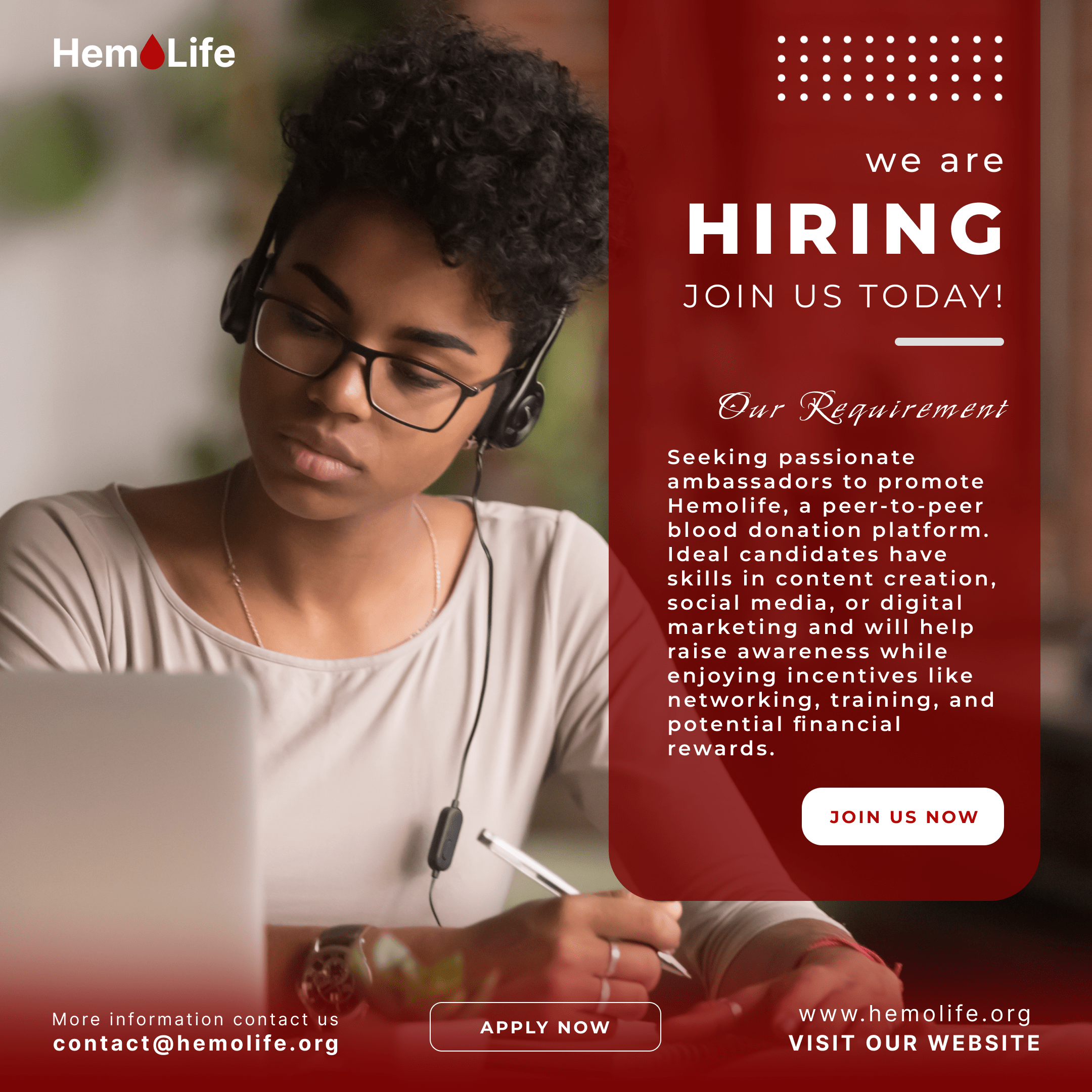
We are Hiring Hemolife Ambassadors
Introduction As we prepare for our App launch, we are actively searching for Ambassadors for Hemolife, a pioneering peer-to-peer blood donation platform revolutionizing how blood donation is managed and accessed. As an Ambassador, you will play a vital role in promoting Hemolife within your campus community, raising awareness about the importance of voluntary blood donation, and encouraging others to join our cause. This is an exciting opportunity to make a meaningful impact, drive positive change, and contribute to saving lives. Job Description: As an Ambassador for Hemolife, your primary responsibilities include: Qualification/Needed Skills Incentives While this is not a paid role at the moment, For your time and following us through this journey, we can provide the following: How to Apply Join us at Hemolife as we work together to make a difference in the lives of those in need of blood transfusions and contribute to building a healthier and more resilient community.
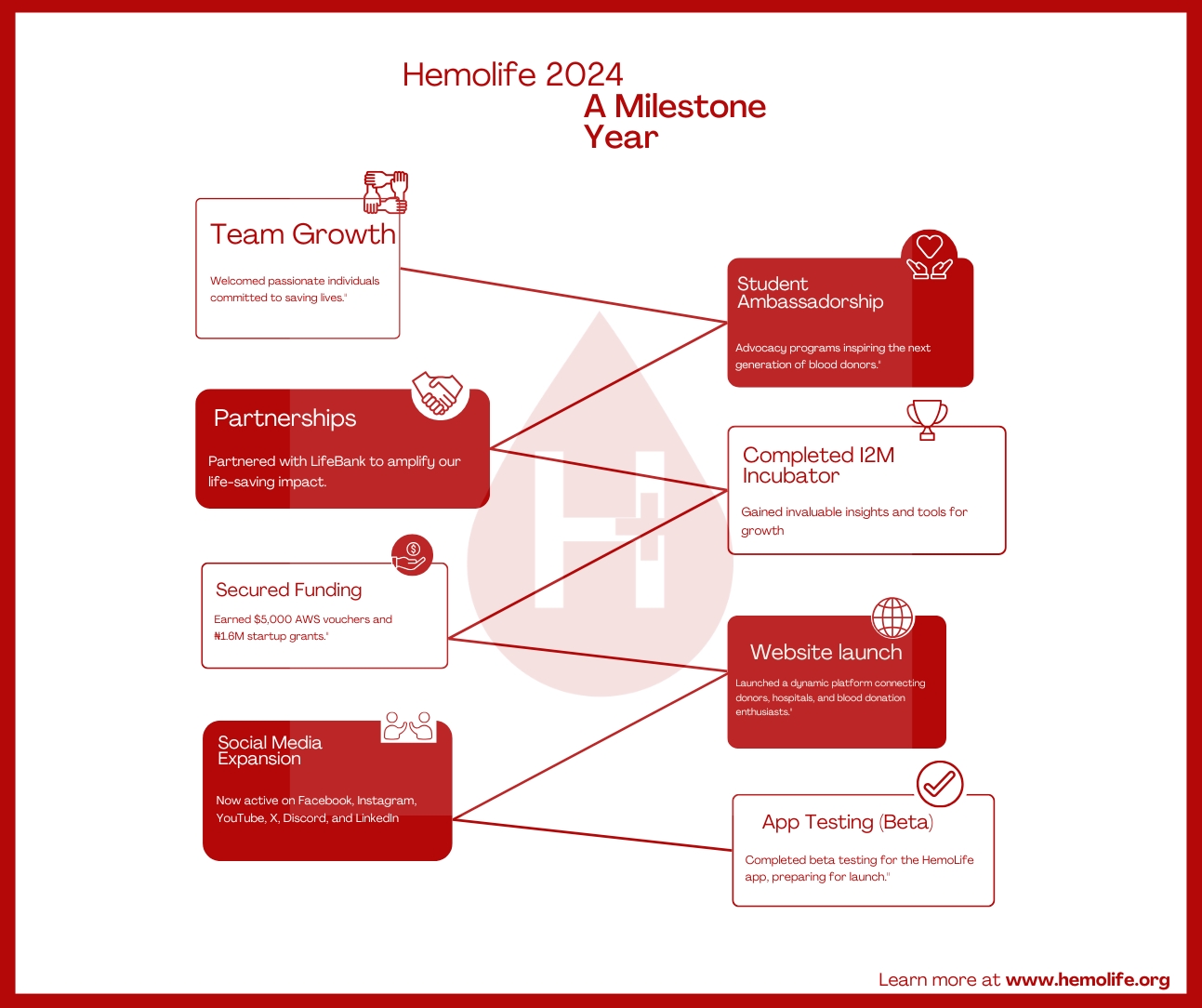
HemoLife: 2024 and 2025 – The Years We Take Off!
As 2024 draws to a close, we at HemoLife reflect on an extraordinary year of growth, impact, and progress. From launching our website to forging meaningful partnerships, the journey has been nothing short of inspiring. Here’s a recap of what we’ve achieved together: 1. Website Launch This year marked the unveiling of the official HemoLife website — a dynamic platform connecting donors, hospitals, and blood donation advocates. The website serves as a hub for information, resources, and tools supporting our mission to revolutionize blood donation in Nigeria and beyond. Visit us at www.hemolife.org. 2. Social Media Channels Launch We expanded our digital presence by launching active social media channels, essential for engaging our growing community, sharing inspiring stories, and raising awareness about blood donation. Connect with us on:Facebook | Instagram | YouTube | X | Discord | LinkedIn 3. Team Expansion Our HemoLife family grew significantly this year. We welcomed passionate individuals from diverse backgrounds who brought fresh ideas, skills, and energy to our mission. Together, we’re building a team committed to saving lives and creating lasting change. We’re always looking for individuals ready to contribute. If you’re interested, reach out to our founder at emmanuel@hemolife.org. 4. Strategic Partnerships In 2024, we proudly partnered with LifeBank, a leader in blood, oxygen, and medical consumables distribution in Nigeria. Additionally, we established relationships with the National Blood Service Commission (NBSC), Coalition of Blood for Africa (COBA), Project Innovation to Market, and the University of Lagos. These partnerships are pivotal as we gear up for 2025. 5. Project Innovation to Market (I2M) Incubator We were selected for and completed the prestigious Project I2M incubator program. This 10-week journey equipped us with invaluable tools and insights to propel our vision forward. Through this program, we secured critical funding and resources: These resources, alongside industry linkages, company registration, and trademark support, are helping us build the infrastructure to scale our operations. 6. Alpha Testing One of our proudest achievements was completing the alpha testing phase of the HemoLife app. This milestone brings us closer to launching a user-friendly, tech-driven platform that connects blood donors with recipients. Thanks to your feedback, we’re refining the app for its official launch in Q1 2025. 7. Ambassadorship Program We launched the HemoLife Student Ambassador Program, empowering young leaders to advocate for blood donation and spread awareness in their communities. Their dedication has been instrumental in driving our mission forward. We welcome partnerships with individuals and organizations ready to champion this cause. Looking Ahead: HemoLife’s Vision for 2025 1. Official App Launch Our much-anticipated app will go live in Q1 2025. With recent collaborations, insights from the I2M program, and successful alpha testing, we’re ensuring a seamless and glitch-free experience from day one. 2. Expansion In 2025, we aim to: 3. Feature Updates We plan to integrate advanced features, including AI, IoT, and blockchain capabilities. This will enable real-time tracking of each pint of blood donated and further enhance user experience. Furthermore, other integrations would ensure that user feedback is incuded as an ongoing process. 4. User Acquisition Campaigns We will launch focused strategies to drive app downloads, grow our donor community, and host blood drives. Active participants will be rewarded, creating a loyal and engaged user base. 5. Strategic Partnerships We’re committed to forging new alliances with health organizations, hospitals, and community groups. Over 20 potential partners have already been identified to help amplify our impact. Join Us in 2025 We’re deeply grateful for your support in 2024 and excited about the opportunities ahead. Together, we’ll tackle challenges, embrace innovation, and create a future where access to safe blood is no longer an issue. Let’s take flight into a transformative 2025 with HemoLife, the first AI-driven blood donation app simplifying access to life-saving resources. Join us — because every pint counts.

Debunking the Myths: The Truth About Blood Donation
INTRODUCTION Blood donation is a selfless act that saves millions of lives worldwide. Despite its importance, several misconceptions and myths surround the process, deterring potential donors (World Health Organization 2022). These myths can lead to a shortage of blood supplies, putting patients’ lives at risk. It is expedient to separate fact from fiction and explore the truth about blood donation (Osaro and Charles 2011). In this post, we’ll delve into the most common myths, providing accurate information and expert insights. By doing so, we aim to encourage more people to become blood donors, helping to ensure a steady supply of blood for those in need. Myth #1: Blood donation is a painful process Fact: While a slight pinch may be felt during the needle insertion, modern equipment and skilled phlebotomists ensure a relatively painless experience (American Red Cross 2023). To minimize discomfort, donors can: – Choose a comfortable seating position – Relax and breathe deeply – Distract themselves with conversation or music during the process Myth #2: Blood donation weakens your immune system Fact: Donating blood has no significant impact on your immune system. Your body replaces the donated blood quickly, and the immune system remains intact (Mayo Clinic 2022). In fact, regular blood donation can help: – Reduce iron levels, lowering the risk of heart disease – Stimulate blood cell production, boosting the immune system Myth #3: Blood donation takes too much time Fact: The entire process typically takes about an hour, including registration, donation, and refreshments (WHO Africa 2021). Donors can: – Schedule appointments in advance – Take advantage of mobile blood donation units – Donate during lunch breaks or after work Myth #4: Blood donation can lead to anemia or iron deficiency Fact: Donating blood does temporarily reduce iron levels, but it doesn’t necessarily lead to anemia or iron deficiency (Olaiya et al. 2004). To minimize the risk: – Donors are eligible to donate after 3–4 months, allowing iron levels to replenish – Donors can increase iron intake through diet or supplements before and after donation – Blood donation centers often provide iron supplements or recommendations for iron-rich foods In fact, regular blood donation can help: – Reduce iron overload, a risk factor for heart disease and other conditions – Stimulate blood cell production, which can help maintain healthy iron levels The benefits of blood donation far outweigh the temporary reduction in iron levels. By taking simple precautions, donors can help save lives while maintaining their own health. Myth #5: You can’t donate blood if you’re taking medications or have a medical condition Fact: While certain medications and medical conditions may affect your eligibility to donate blood, many donors can still participate (American Red Cross 2023). It is essential to disclose your medical history and medications during the pre-donation screening process. Some examples include: – Blood pressure medications: Most donors taking blood pressure medications can still donate, but may need to provide additional information. – Cholesterol medications: Donors taking cholesterol medications are generally eligible to donate. – Diabetes: Donors with well-controlled diabetes can usually donate, but may need to provide additional information. – Pregnancy: Women may donate blood twelve weeks after giving birth, but may need to wait longer if they had complications. Donors with medical conditions or taking medications should always: – Consult their doctor or healthcare provider before donating – Disclose their medical history and medications during the pre-donation screening process – Follow the guidance of the medical professionals at the blood donation center Remember, the medical professionals at the blood donation center will assess your eligibility on a case-by-case basis. Don’t assume you’re ineligible without consulting them first. CONCLUSION Don’t let myths hold you back from saving lives. Blood donation is a safe, quick, and rewarding process. By debunking these myths, we hope to encourage more people to become blood donors. Remember, every pint counts, and your donation can make a significant difference in someone’s life. Works Cited American Red Cross. “Common Myths About Blood Donation.” RedCrossBlood.org, 2023. Mayo Clinic. “Blood Donation: What You Can Expect.” Mayo Clinic, 2022. Olaiya, M. A., et al. “Knowledge, Attitudes, Beliefs and Motivations Towards Blood Donations Among Blood Donors in Lagos, Nigeria.” Transfusion Medicine, vol. 14, no. 1, 2004, pp. 13–17. Osaro, Erhabor, and A. A. Charles. “The Challenges of Improving Blood Transfusion Services in Nigeria.” Internet Journal of Hematology, vol. 7, no. 1, 2011. World Health Organization. “Blood Safety and Availability.” WHO, 2022. WHO Africa. “World Blood Donor Day: Addressing Myths and Misconceptions.” WHO Regional Office for Africa, 2021. — Article by Kalu Kate

Hemolife Student Ambassador Recruitment
Introduction We are actively in search of Student Ambassadors for Hemolife, a pioneering peer-to-peer blood donation platform revolutionizing the way blood donation is managed and accessed. As a Student Ambassador, you will play a vital role in promoting Hemolife within your campus community, raising awareness about the importance of voluntary blood donation, and encouraging fellow students to join our cause. This is an exciting opportunity to make a meaningful impact, drive positive change, and contribute to saving lives. Job Description: Qualification Incentives For your time and following us through this journey, we can provide the following: Application for the Hemolife Student Ambassador Program Application Closed – 27th May, 2024. Join us at hemolife.org as we work together to make a difference in the lives of those in need of blood transfusions and contribute to building a healthier and more resilient community.
Blood Donation
Blood donation is a voluntary process where a person donates blood to be used for transfusions or medical research. It’s a critical aspect of healthcare systems worldwide, providing life-saving support for patients undergoing surgeries, experiencing trauma, or managing various medical conditions. Importance of Blood Donation: Types of Blood Donation: Blood Components: Eligibility Criteria: The Donation Process: Post-Donation: Benefits of Blood Donation: Conclusion: Blood donation is a vital aspect of modern healthcare systems, providing essential support for patients in need of transfusions and contributing to medical research and emergency response efforts. Through voluntary donations, individuals can play a significant role in improving and saving lives.